
You are on eastlansinginfo.org, ELi's old domain, which is now an archive of news (as of early April, 2020). If you are looking for the latest news, go to eastlansinginfo.news and update your bookmarks accordingly!
You are on eastlansinginfo.org, ELi's old domain, which is now an archive of news (as of early April, 2020). If you are looking for the latest news, go to eastlansinginfo.news and update your bookmarks accordingly!
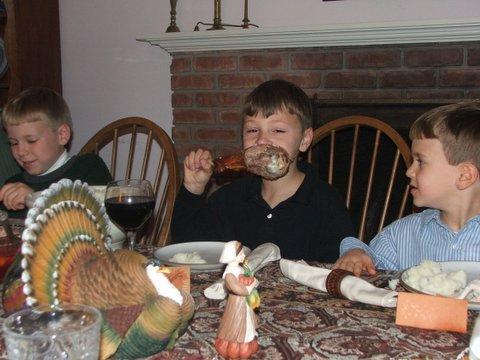
Food safety is a subject that bores some people (“I’ve been cooking for thirty years and I haven’t killed anybody yet”) and terrifies others (“the timer thingy popped up, but it still looks red inside.”)
When it’s time to cook the Thanksgiving turkey, even the most seasoned chef should follow basic food safety rules to ensure that a delicious feast doesn’t end with a run to the nearest ER.
Aron Sousa, MD, will be rounding at Sparrow Hospital on Thanksgiving. According to Sousa, “even smart people give themselves food poisoning.” On Thanksgiving and the day after, the Sparrow ER “can be a zoo. Mostly it’s people who have overindulged and have set off problems from their diet. We get gout, diabetes problems, heart failure."
On top of that, there is food poisoning. “If you don’t cook your turkey to the right temp, you can get Salmonella, Listeria, or Campylobacter. The bigger issue is that you should make sure you thaw it properly before cooking, so that it really cooks inside. Doesn’t matter if you wash it. You have to cook it.”
Another local physician, Peter Graham, MD, adds that “staph food poisoning is bad, and E. coli can kill babies and frail elderly people.” Graham echoes Sousa on proper cooking: “use a meat thermometer, not just the pop-up timer that comes in the turkey, and keep stuffing out of the bird.”
That’s the bad news. The good news is that it’s really pretty easy to keep everyone safe by taking a few precautions.
Thaw Safely
Many of us begin with a frozen turkey. Turkeys that are being thawed must be kept at a safe temperature, which is below 40° F or above 140° F. Between 40° and 140°, dangerous bacteria can begin to grow. (A frozen turkey is safe indefinitely.) You have plenty of time to wash and otherwise prep your turkey after it’s thawed; what is not safe is to thaw it in an empty sink or on a counter.
There are three safe ways to thaw food: in the refrigerator, in cold water, and in a microwave oven. For instructions, see the USDA’s "Safe Methods for Thawing."
Prep Safely
Once your turkey is thawed, it’s time to prep it for cooking. This might involve pulling giblets out of the cavity (great to add to your stuffing or cook up for your animal friends), rubbing oil or butter onto or under the skin, or adding some herbs and fruit to the cavity for extra flavor. Because the turkey is now thawed, and out of the refrigerator, it’s important to clean everything it touches – your hands, your cutting board, and your knives. Once the turkey is in the oven, be sure to wash everything thoroughly with soap and hot water, from cutting board to hands, before there is contact with any other food.
Stuff Safely
Although it’s an old tradition, it’s really safest not to stuff the bird at all. Stuffing cooked inside a bird becomes a place for bacteria to grow. It’s fine to add aromatics like a bundle of herbs and a few oranges into the bird’s cavity because they will be discarded after cooking. Stuffing, on the other hand, is meant to be eaten as part of the meal. Best practice is to cook stuffing in a pan outside the turkey. If you must stuff, do it immediately before cooking, and use a food thermometer to be sure that the center of the stuffing reaches a minimum of 165°F.
Pro tip: stuffing is delicious, but it doesn’t taste any better if it’s cooked inside a turkey. Even if it did taste better, it wouldn’t be worth the risk.
Cook Safely
First, take the time to figure out how long it will take your turkey to cook. For example, an 18-22 pound whole turkey with no stuffing will take about 3-1/2 to 4 hours to reach a safe internal temperature. Cooking times change if the bird is stuffed, or if a breast is cooked instead of a whole bird. Once the turkey is cooked (unless you are serving it in a heated dish), you’ll have two hours to carve it, serve it, and eat it before it must be refrigerated or re-heated for safety reasons.
Second, if you don’t already have a meat thermometer, put one in the shopping cart with your Thanksgiving groceries. Seriously. Pop-up timers are fantastic in theory, but in practice they can be unreliable in ways that can result in undercooking (unsafe) or overcooking (yucky).
The options range from the very simple probe with a round dial (available at Meijer, Target, and various other local places) to very fancy digital varieties. The digital models are more accurate, but any meat thermometer should be calibrated before use to assure a proper read.
Set your oven temperature no lower than 325°F, and be sure the turkey is completely thawed before it goes into the oven. (If you find ice crystals, hold off and use the time to run out for more wine, cheese and crackers to keep everyone happy until dinner’s ready).
Periodically use your thermometer to check the internal temperature at the center of the stuffing (if any) and the meaty portion of the breast, thigh, and wing joint. Cooking times will vary. The food thermometer must read 165°F in all of those places before it’s ready to serve. Once it’s out of the oven, let the turkey stand 20 minutes before removing any stuffing and carving the meat.
Fail Safely
If you do everything right and someone still seems sicker than the usual post-Thanksgiving bloat? Better safe than sorry. Asked how we know if we need to go to the ER, Sousa says “If you have to ask, you have to go.” He also notes that any local ER is a good choice, and that “they should all be able to handle it.”
Sign up for ELi’s Weekly News Roundup by clicking here.
Appreciate ELi's timely reports on what's happening in our City? Donate to support our work bringing you editorial-free, high-quality news of the people, by the people, and for the people of East Lansing! Donate easily on line or donate by check. Because ELi is a recognized 501(c)3 nonprofit, your donations are tax deductible.
eastlansinginfo.org © 2013-2020 East Lansing Info