
You are on eastlansinginfo.org, ELi's old domain, which is now an archive of news (as of early April, 2020). If you are looking for the latest news, go to eastlansinginfo.news and update your bookmarks accordingly!
You are on eastlansinginfo.org, ELi's old domain, which is now an archive of news (as of early April, 2020). If you are looking for the latest news, go to eastlansinginfo.news and update your bookmarks accordingly!

Editor's note: Pictures from Eliot Singer follow his text.
I grew up in Boston in the '50s and '60s with fall color trips, just as far as the wilderness of Walden Pond when very young, graduating to Vermont and New Hampshire and then to autumnal hikes with my father or college buddies in the White Mountains. My wife and I were married on Mount Washington during late-September peak colors.
When we moved to Michigan in 1980, naturally fall anniversary trips became part of our quest to know the state. Favorite places instate are: shorter or longer options in the eastern and western U.P. (anniversary), or Sleeping Bear/Leelanau, and the Au Sable/Alpena area in the northeast Lower Peninsula, mid-October for best colors.
But forget not the north shore of Lake Superior, although you now need special identification to cross the border (we use passport cards), and the loonie is no longer a bargain. (Contrary to popular belief, you do not need a passport or to change your money to cross the Mackinac Bridge.)
Algoma Central Railway
A very popular late-September to early-October excursion (make reservations!) is the Agawa Canyon day-trip on the Algoma Central Railway from Canadian Sault Ste. Marie.
There are several options in addition to the fall colours day-trip, including the snow train and accommodations packages (among them, Errington Wilderness Island Resort).
We once took the train all the way to Hearst, with views of the boreal forest and lakes, complete with moose, whistle stops, and a logging camp. I recommend not ordering Irish coffee to take the chill off (on the menu at the hotel restaurant), since no one seemed to know how to make it. Follow my wife's "when in Hearst" approach to travel and stick to "une Bleue"! (Tour of the line trip shown here.)
Lake Superior Provincial Park
Another favourite anniversary (late September) trip of ours is to Lake Superior Provincial Park. Actually we stay an hour south (beautiful drive to and from) on Batchawana Bay at the Lake Superior Salzburger Hof Resort. The accommodation is nothing spectacular, but there is an excellent Austrian restaurant on the premises, so we can safely imbibe and not need to drive somewhere after dark.
I am delighted to see that the Batchewana First Nations of Ojibways has taken on a restoration of the historic St. Isaac Jogues church, which is en route to the resort. (Jogues and Père Raymbault were the first Jesuit missionaries to reach the Sault in 1641.)
Nearby is Agawa Indian Crafts/Canadian Carver (not to mention a gas station, a vital necessity before the round trip through the park). I am not a shopper, but Agawa Indian Crafts has a special place in my heart, because it is where I bought my politically incorrect fur trapper winter hat and my faded black felt cowboy hat that has protected me from hail in the Rockies, sun at the base of the Grand Canyon, many a mosquito, and one torrential downpour on the Awausee Trail.
Pancake Bay has a sandy beach, but beyond it, the north shore is much more rugged than the shoreline of the eastern U.P. It is of the same mineral rich geology as Isle Royale and the tip of the Keweenaw to the west that attracted, mostly unsuccessful, miners as far back as Louis XIV (and before that First Nations peoples).
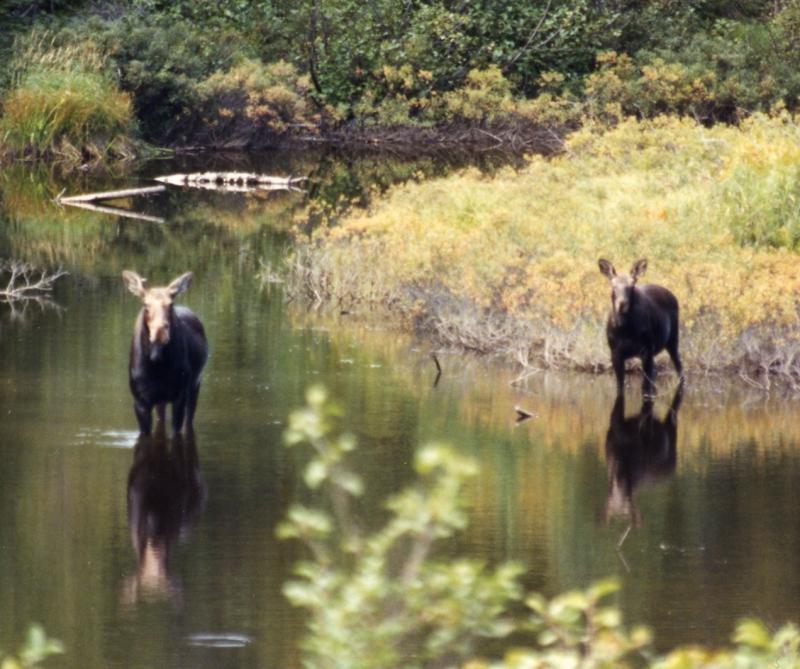
The park is a great place to see moose - one time, when we had pulled over with the blinking lights on, an OPP officer stopped to see if we were in trouble, and stayed to borrow the binoculars.
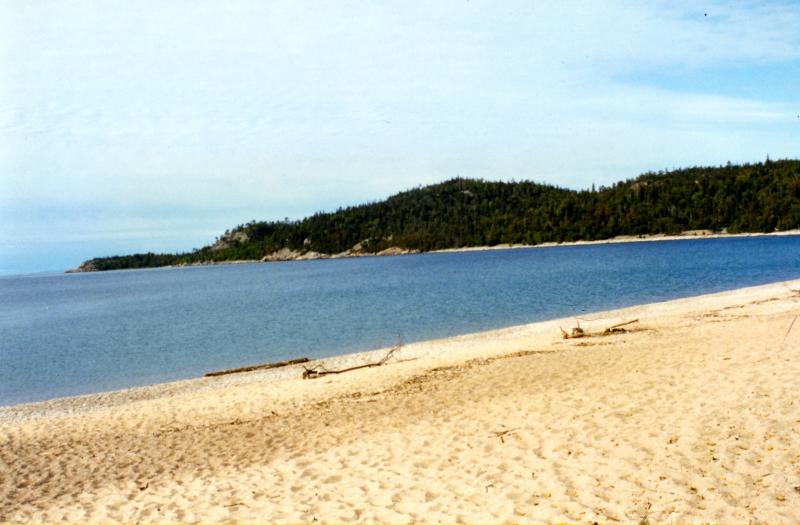
Highlights of the park as drive-in stops are: Sinclair and Katherine Cove, at the south end, and Old Woman Bay at the north end. With four-wheel drive and good clearance, you can get to the grand rock formation, Gargantua, a famed traveler's landmark.
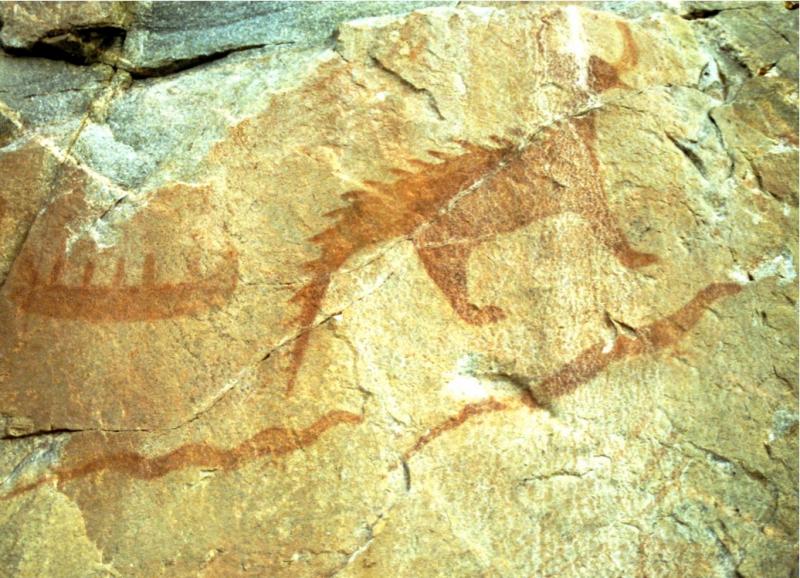
And, of course, there are the Agawa Rock Pictographs. When the water level is low and the waves calm, you can more or less safely walk out on the ledge to see them, or they can be seen from canoe or kayak. (There are several sheltered spots on the lake for canoeing and kayaking, without taking to open water, plus river and inland lakes options, including some multi-day treks. The park web site tells about fishing.) A cultural difference with Canada is that it is left to our discretion to decide when the ledge is too dangerous - some visits it has been, not that everyone agreed.
The most scenic hiking trails are rough, with steep, rocky, if relatively short, ups and downs. My favourite day-hikes are the Nokomis Trail, overlooking Old Woman Bay, the Peat Mountain Trail, and the Awausee Trail (the Awausee - Bullhead or Catfish - were one of the early historically identified divisions of the Ojibwe/Anishinaabeg).
There are also longer backpacking options and some easier, though less scenic, day-hikes, of which the first part of the Pinguisibi (Sand River) Trail to the falls is a good option, as is the eight-mile (round-trip) Orphan Lake Trail. A pretty, 2 km, easy hike is the Crescent Lake Trail at the south end of the park, just beyond the Montreal River. (Even the easier hikes are best done with hiking boots and a sturdy walking stick.)
If you are looking for serious guided adventure (summer only), with historical overtones, consider Naturally Superior out of Wawa - there are limited accommodations at their Rock Island Lodge.
Wewe is the Ojibwe word for the Giant Canadian Goose - there is a large steel statue in town, built to welcome travellers on the trans-Canada highway that is in structural trouble and in the midst of a fundraising campaign for a replacement.
A guided adventure is probably the only way to experience the ancient First Nations and fur trader canoe route along the north shore. Other outfitters who offer sea kayaking trips along the Lake Superior Provincial Park coast include: Uncommon Adventures of Beulah, Michigan, and Caribou Expeditions of Goulais River, Ontario.
Michicipoten Post Provincial Park near Wawa is a scenic area, not an open-air museum reconstructing the French post of 1714 or Alexander Henry's post of 1766 or the later Hudson's Bay post.
There are several historical accounts of traversing the north shore, of which Alexander Henry's Travels & Adventures, now readily available through Google Books, is the best known - and some of it may even be true!
The shoreline from the Sault to Wawa goes north, and at the top of Lake Superior Provincial Park, we reach the northernmost limit of the sugar maple, the favoured tree of fall colour enthusiasts. From the road, the trails, the water, and the train, the sugar maples and other deciduous trees, intermixed with evergreens, are plentiful, making for fall colours every bit as grand as the celebrated fall colors of northern New England.
Below, Agawa Rock Pictographs, Lake Superior Provincial Park:
Below, moose near highway at Lake Superior Provincial Park, Late September 1996:
Below, Old Woman Bay, Lake Superior Provincial Park, Late September 1996:
Below, Catherine Cove, Lake Superior Provincial Park, Late September 1998:
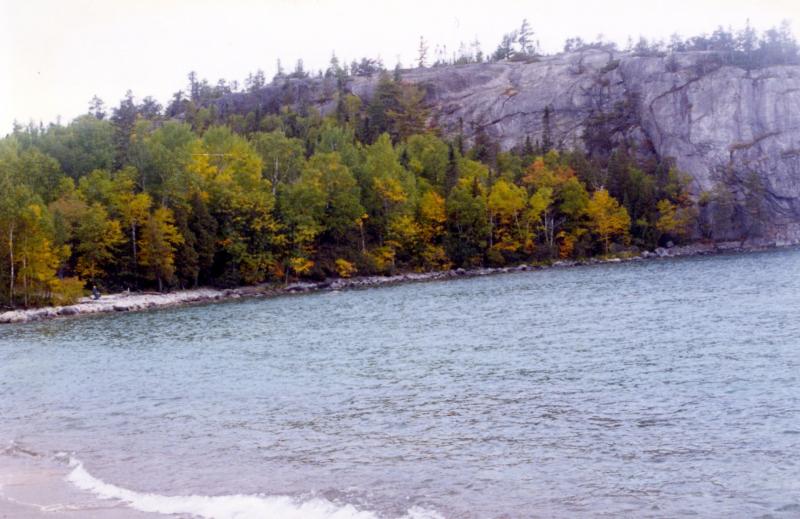
Below, shoreline as seen from Nokomis Trail, Lake Superior Provincial Park, Late September 1998:
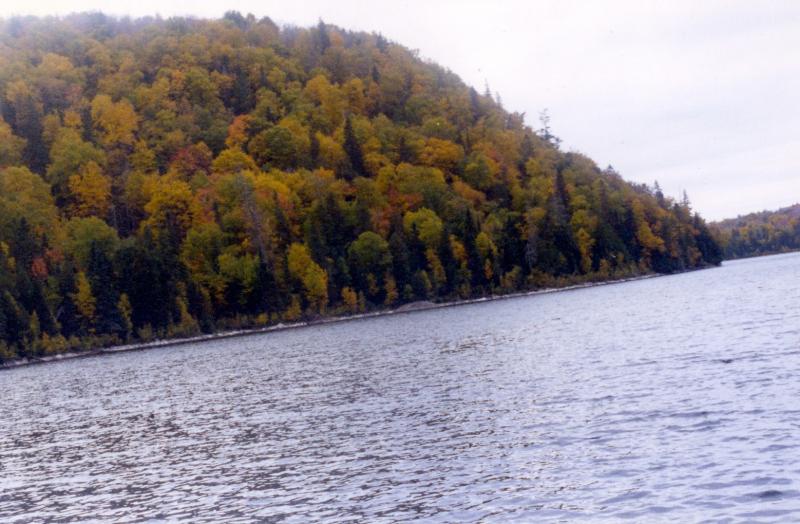
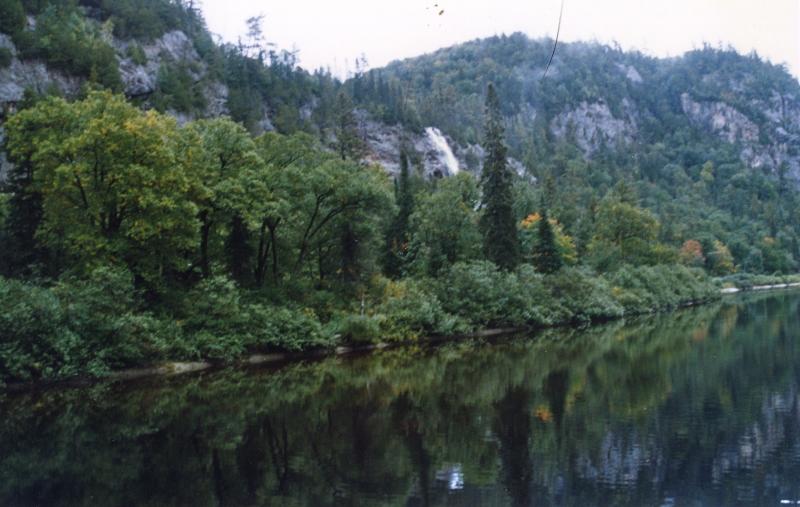
Below, Agawa Canyon, Late September 1996:
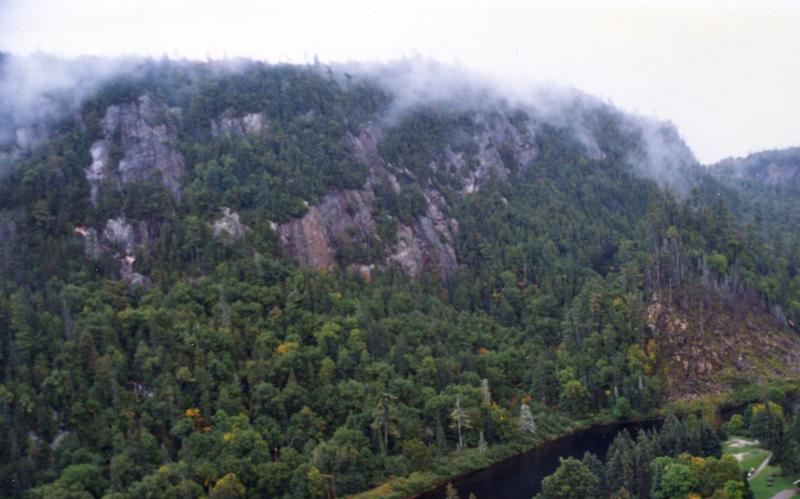
Below, Agawa Canyon, Late September 1996:
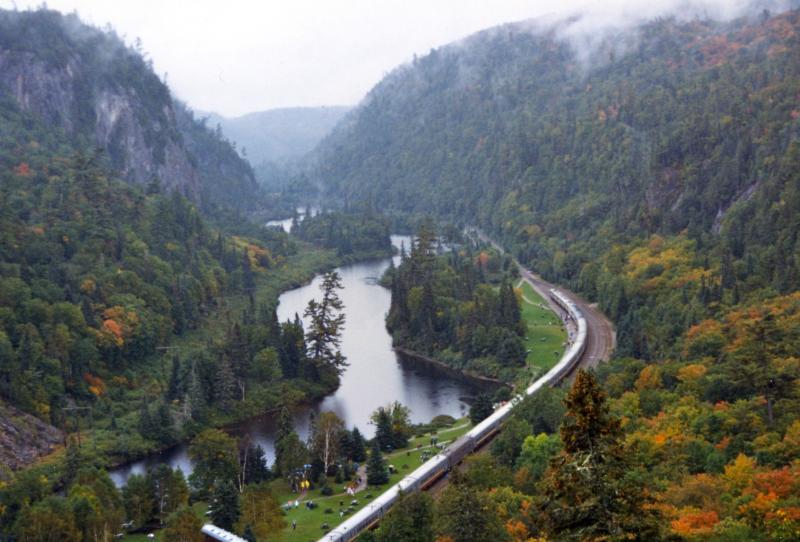
Below, Agawa Canyon, Late September 1996:
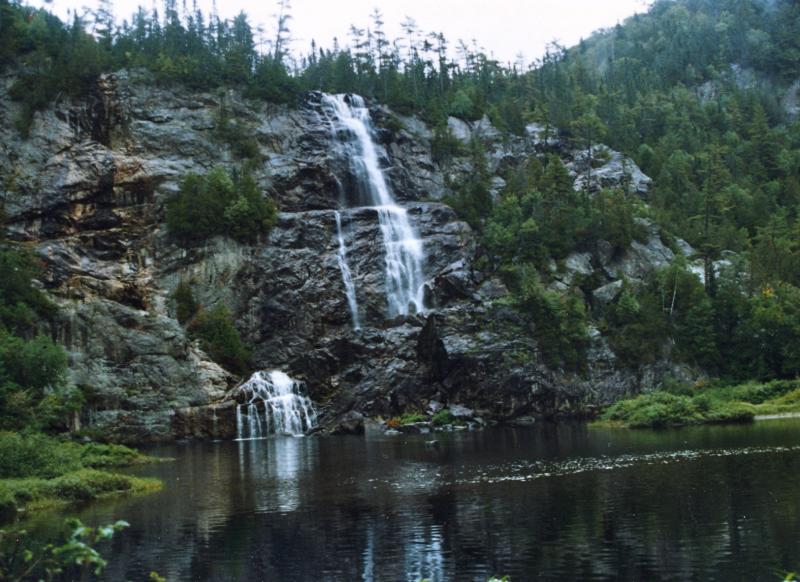
Below, Agawa Canyon, Late September 1996:
eastlansinginfo.org © 2013-2020 East Lansing Info