
You are on eastlansinginfo.org, ELi's old domain, which is now an archive of news (as of early April, 2020). If you are looking for the latest news, go to eastlansinginfo.news and update your bookmarks accordingly!
You are on eastlansinginfo.org, ELi's old domain, which is now an archive of news (as of early April, 2020). If you are looking for the latest news, go to eastlansinginfo.news and update your bookmarks accordingly!
The time has come, my friends, to speak of many things: of scions and slips and grafting wax, of cabbages and clings, and why tomatoes grow in pots and whether March means spring.
The basil, cabbage, and squashes are all planted in my basement under old shop lights. Those are all well labeled and sprouting, but unfortunately the snow-sowing I did a couple of months ago will lead to some mysteries until the kale distinguishes itself from the beets.
As the weather warms and the days lengthen, the fruit trees in my yard will come out of their dormancy, which means the time is ripe for grafting trees. Grafting allows different varieties of a tree to be combined in one plant. Grafting a good tasting variety on a hardy root-stock is very common in fruit trees. Nearly all fruit trees you buy will have been grafted for this reason. More and more vegetables are also available as grafted plants.
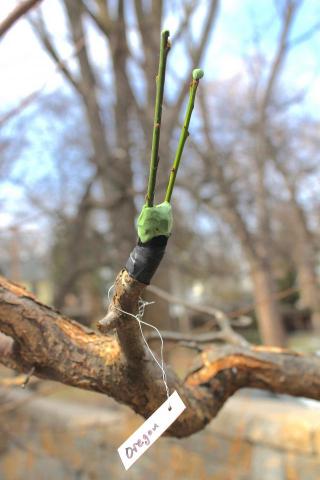
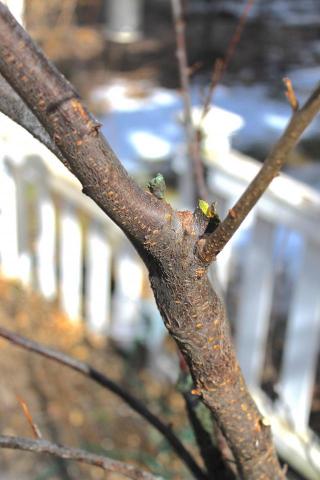
Grafting is not difficult, although it takes some planning and practice. The basic premise is to join the growth layer of one stem onto the growth layer of a branch or root-stock of another plant. Above is a picture of grafts made this weekend and below some grafts I prepared 2-3 years ago.
Whole books are written about grafting trees and the related process of “budding” done later in the year. I tend to do something called bark grafting because it is easy and my grandfather taught me how to do it. When I need a reminder of the process, I find this video, which helps me get organized and properly oriented.
Most people graft in order to propagate varieties they particularly like. As an example, seedless plant growers obviously need a seedless way to reproduce their plants. For seedless or hybrid fruits that won’t return “true” from seed, most growers use grafting or budding under license from the owner of the variety patent.
I graft my plum trees because they have to cross-pollenate one variety with another variety to bear fruit. By grafting a second variety onto each tree, I hope to get more cross-pollination and therefore more fruit.
Here are a couple of thoughts on grafting:
eastlansinginfo.org © 2013-2020 East Lansing Info