
You are on eastlansinginfo.org, ELi's old domain, which is now an archive of news (as of early April, 2020). If you are looking for the latest news, go to eastlansinginfo.news and update your bookmarks accordingly!
You are on eastlansinginfo.org, ELi's old domain, which is now an archive of news (as of early April, 2020). If you are looking for the latest news, go to eastlansinginfo.news and update your bookmarks accordingly!
After the most recent rain, the cottonwoods of East Lansing have begun releasing their cottony seeds. The eastern cottonwood, Populus deltoides, is a huge hardwood tree native to the eastern U.S. and common in damp areas and the banks of rivers and streams of Michigan. A young tree can grow more than six feet a year and a 150-foot-tall, mature tree can develop a vase-shaped crown 75 feet across.
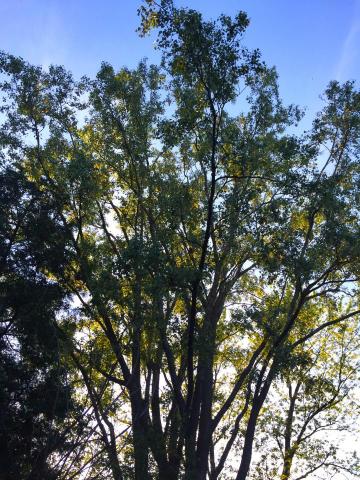
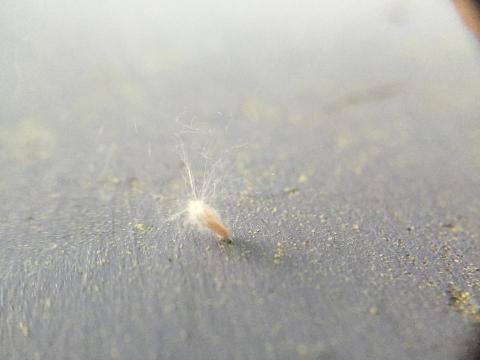
Cottonwoods grow quickly, help control marshy areas by absorbing lots of water, provide wonderful shade, and are a big mess for the two weeks a year when they release their seeds. The seeds themselves are attached to a wispy ball of cellulose, which helps the seeds float through the air for miles in a good wind. You can see below a magnified picture of cottonwood seed attached at one end to a wisp of cotton, which functions as sail in the wind. (As an aside, there is still some yellow spruce pollen visible in the background of the picture.)
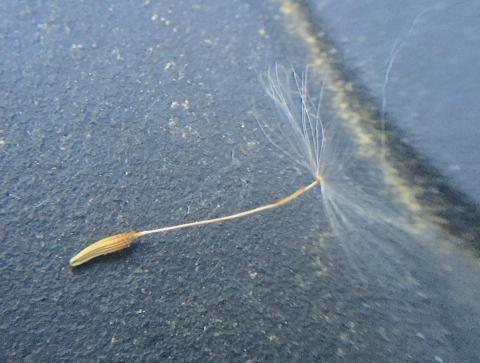
The cottonwood tree is not the only plant to use a cellulose sail to disperse its seeds in the wind. The plant commonly known as “cotton,” amounting to 90% of the cotton grown in the world, is Gossypium hirsutum. It uses the cellulose boll to disperse its seeds in the wind. Another example is the dandelion, which has the same structural system as the cottonwood, as you can see in the pictures below. The cellulose “sail” of the dandelion is attached at one end of the seed, which is released from the base of the old dandelion flower head.
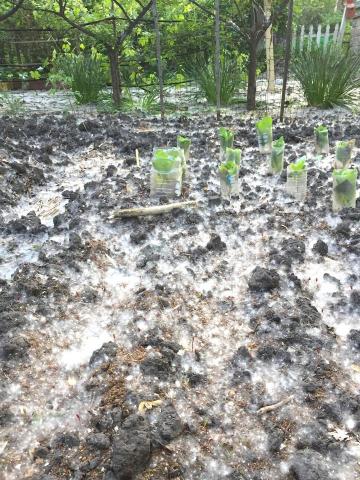
There are now seedless cultivars of the eastern cottonwood, which avoid the mess of the cotton-strewn seeds of the native tree. Some people complain about the spring “snow fall” of cotton and seeds that accumulate in the lawns and gardens of East Lansing each spring. The picture at the top of this story shows one day’s accumulation of cottonwood seed amongst baby carrots and cabbage next door to a large cottonwood tree.
Although the volume of cotton and seed can seem overwhelming each year, the cottonwood cotton and seed is not a difficult to manage. The cotton itself disappears quite quickly with a rain, and the young seedlings are easily and completely dispatched by a hoe or a mower.
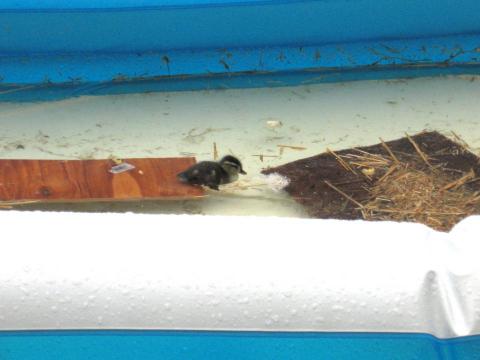
The seeds themselves provide food for a variety of animals, including ducks. The author and his family rescued a wood duck several years ago, but the duckling, whom we named Harold, would not eat seeds or commercial duck feed. Just as the family was about to despair for young Harold—we were having great difficulty finding a wild bird rehabilitation home for him—the neighboring cottonwood released its cottony seed, which Harold happily snapped up from the water of his pool. Below is a picture of Harold near the cottonwood seed and a video of Harold falling asleep. A day later, we found and transported him to an appropriate rescue shelter.
eastlansinginfo.org © 2013-2020 East Lansing Info