
You are on eastlansinginfo.org, ELi's old domain, which is now an archive of news (as of early April, 2020). If you are looking for the latest news, go to eastlansinginfo.news and update your bookmarks accordingly!
You are on eastlansinginfo.org, ELi's old domain, which is now an archive of news (as of early April, 2020). If you are looking for the latest news, go to eastlansinginfo.news and update your bookmarks accordingly!
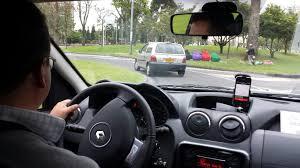
In the midst of research I conducted for yesterday’s “Ask ELi” report on the safety of rideshare services like Uber compared to traditional taxi services that are regulated under the Greater Lansing Taxi Authority, I encountered a diverse set of perceptions about how the East Lansing Police Department (ELPD) views and treats rideshares. Yesterday I spoke with ELPD spokesperson Lieutenant Scott Wriggelsworth to get a better sense of the scene.
One of the things I asked him about is whether ELPD is “targeting” Uber drivers. The Uber driver I called Francine in yesterday’s report told me a story of encountering an Uber-hostile ELPD officer when Francine was picking up a fare at a downtown East Lansing bar around closing time.
Francine said that although she was not blocking traffic, the officer issued her a $175 citation for “impeding traffic flow.” She also told me that the officer told her ELPD officers had been told to target Uber drivers.
This story contrasted with a story told to me by another East Lansing-area Uber driver, an older man I’ll call Fred. Fred says that on his second night driving for Uber, “I was on my way to pick up a rider when I made a poor judgment at a yellow traffic signal and ran a red light in front of a police officer. Of course I was promptly pulled over.”
According to Fred, “After I informed the officer that I was driving for Uber and admitted that I made a mistake at the traffic signal, the police officer thanked me for helping to keep the students safe and he let me off with a warning.” Fred is not sure if it was an ELPD or MSU Police officer.
Another older male Uber driver, whom I’ll call Jeremy, says that Uber drivers frequently stop in ill-advised locations from the point of view of both traffic flow and public safety. He says he understands why some drivers are ticketed. He tries to get fares to meet him in safe-to-pick-up locations, but they are not always willing to do so.
Yet another older male Uber driver—incidentally, white-collar-employed, older, white males seem to be the dominant norm in our local Uber environment—told me, “The only hassle I got from the ELPD was around 2:30 a.m. when I was pulled over for absolutely no reason: I was driving the speed limit (always do in EL during bar hours), and was (of course) totally sober. He told me he pulled me over because I had touched one of the white lines between lanes.”
This man, whom I’ll call Bill, referred to the situation as “total b.s.” (Only he spelled it out.)
Bill says he was once stopped on Service Road on campus going 45 miles-per-hour in a 30 mile-per-hour zone at 2:30 a.m. when there was no one else around. The officer—he’s not sure if it was ELPD or MSU—determined Bill was sober and then let him go with a warning, even though Bill says, “I deserved a ticket.”
I asked ELPD’s Lieutenant Wriggelsworth yesterday whether it is the case that ELPD officers have been told to target rideshare drivers. He said they have not, and that ELPD tickets all cab drivers the same.
Wriggelsworth told me that “impeding traffic is an oft-issued citation to cabbies.” He said that if a driver—whether it’s a cab-driver, an Uber driver, or an ordinary citizen—stops along the westbound lane of Albert Street in front of Harper’s to pick up a fare, he or she is going to be cited for blocking traffic because it is not the right place to stop to pick someone up.
Bill told me that “picking up passengers in the Albert Ave. [bar-heavy] war zone can be challenging, especially in warm weather when the drunks use the streets as sidewalks. I was constantly amazed there weren’t a lot of car-pedestrian accidents.” He notes that Greater Lansing Taxi Authority-approved cabs have reserved parking in the area, and other drivers do not.
Bill has stopped driving for Uber, in part because Uber drastically lowered how much drivers could make—making it almost impossible to even make a profit, no less minimum wage according to Bill—but also because, “The level of intoxication was sometimes scary. I occasionally had passengers who really needed to go to the ER rather than home—they could barely walk.”
He says he made sure in particular that female riders made it safely into the buildings they were going to before he departed. He tells me his riders say they preferred him to a conventional cab driver, because “my vehicle was cleaner, in better mechanical shape, and I reminded them of their grandfather.”
In my research on this story, several people speculated to me that the City of East Lansing wants to restrict cab-type services to cab companies and cab drivers that submit to the rules of the Greater Lansing Taxi Authority because then the City can make more money.
Some also speculated that ELPD is issuing more citations because the City is in dire financial straits and has seen income from fines drop by $400,000 in the last year.
I put these theories to Lieutenant Wriggelsworth, who responded: “Our goal is never financially-driven” at ELPD. “It is always safety driven.”
He says any income that accrues to the City is “a secondary result of the actions we take.” He adds that the ELPD is not under any edict or orders from the City to increase arrests or tickets to help the City’s bottom line.
All parties seem to agree that the recent murders by a new Uber driver in Kalamazoo—who apparently killed people between taking on fares—says nothing about Uber. Says Uber-driver Fred, “Hundreds of thousands of riders are safely transported by Uber drivers every day without incident, and those rides never make the news. The Kalamazoo shooter could have been a regular taxi driver, a pizza delivery person, a letter carrier, a meter reader, etc.”
Wriggelsworth observes that “the rideshare approach is a relatively new phenomenon,” and acknowledges that while ELPD does significant background checking on Taxi Authority-related drivers, Uber also does background checking and builds in safety systems. That includes showing riders the name and photo of drivers, the make and license plates of cars, and providing the ability for riders and family members or friends to track a car a rider has elected to hire.
Says Wriggelsworth, the ELPD “doesn’t necessarily have a stance” on cabs versus rideshares. He says, “It’s going to be the public that decides which they are going to use, if either.”
eastlansinginfo.org © 2013-2020 East Lansing Info